CRISPR Gene Editing: A Concise Overview
CRISPR (Clustered Regularly Interspaced Short Palindromic Repeats) is a revolutionary gene-editing tool adapted from a natural bacterial defense system.
Principle
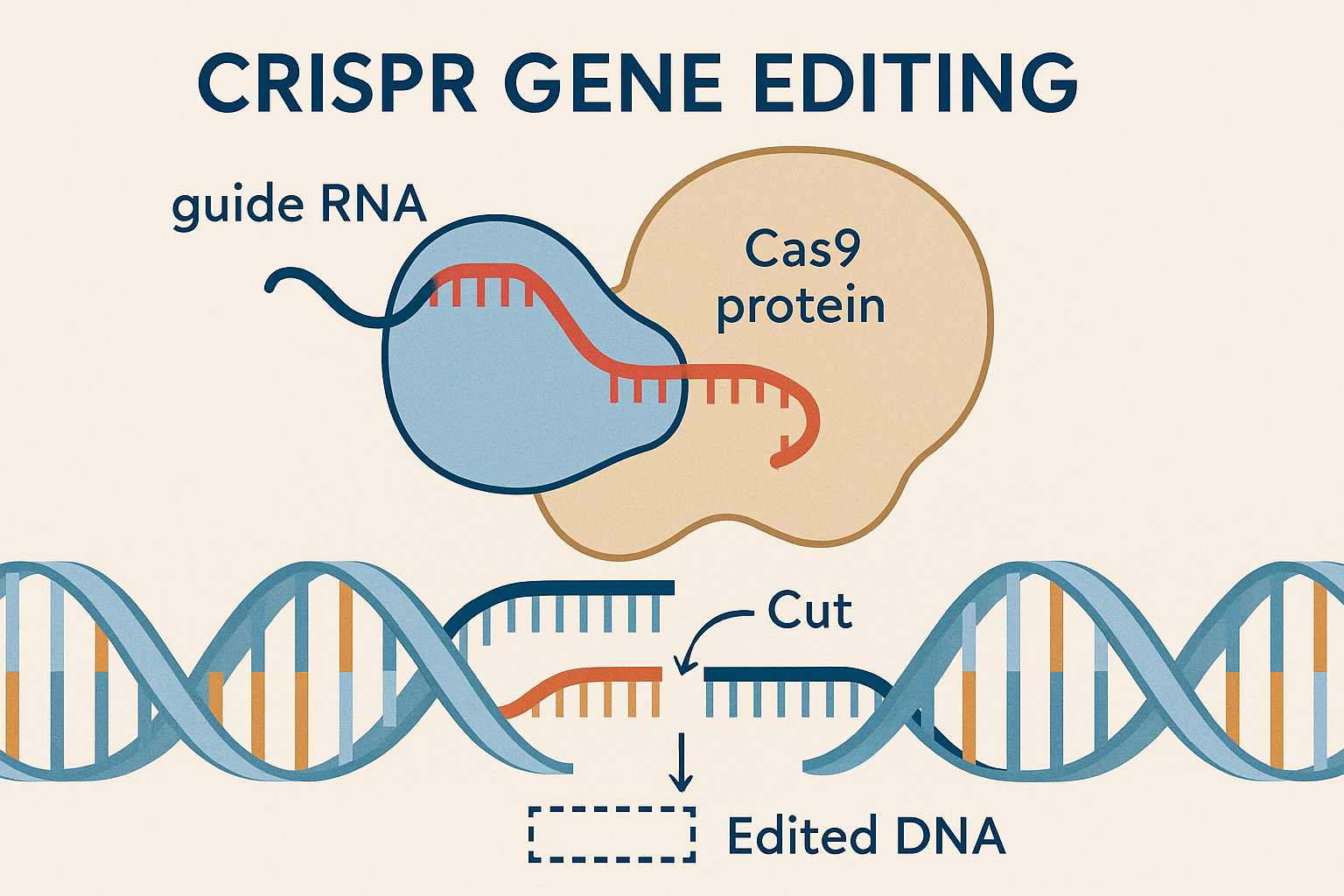
CRISPR uses an enzyme (usually Cas9) guided by a short RNA sequence to find and cut specific DNA regions, allowing precise gene modification.
How Produced
Scientists design guide RNAs that match the target DNA. The Cas9 protein and guide RNA are delivered into cells via plasmids, viral vectors, or nanoparticles.
Structure
A CRISPR system includes:
- Guide RNA (gRNA)
- Cas9 nuclease (DNA-cutting enzyme)
- Delivery system
Clinical Indications
Being explored for genetic diseases (e.g., sickle cell anemia, β-thalassemia), cancer immunotherapy, and infectious diseases like HIV.
Mechanism of Action
The gRNA directs Cas9 to the exact DNA site, where it cuts the DNA. The cell’s repair processes then disable or correct the gene.
Benefits
- Precise gene targeting
- Potential one-time cures
- Wide research applications
Toxicities and Management
- Off-target effects
- Immune reactions
- Managed by careful design and delivery methods
Challenges
- Ethical concerns (germline editing)
- Delivery to target tissues
- Long-term safety
Future Directions
Safer, more accurate edits; in vivo applications; treating more genetic disorders.
Conclusion
CRISPR holds promise for curing genetic diseases and transforming medicine but must be used responsibly.